



A note from Solhemmet: in August 2026, Diário de Coimbra published a feature on Solhemmet's arrival in Portugal and on the work already under way with municipalities in the Centro region. The article is reproduced here in full, with the permission of Diário de Coimbra.
Portugal is moving rapidly towards becoming the oldest country in Europe by 2040. Far from being an abstract projection, it is already the second oldest in the European Union, behind only Italy. In practical terms, and according to the most recent figures published by Statistics Portugal (INE)/Pordata for 2024, almost a quarter of the Portuguese population is over 65.
Against this backdrop, the domestic market faces a double challenge: a housing crisis and an almost complete absence of intermediate options for a large share of the senior population who do not see themselves in traditional care homes, given the autonomy and capability they still retain. This is where the cooperative model of Solhemmet, founded by Michael Guldstrand, comes in. The Swedish property developer brings with it a philosophy grounded in social architecture and in the humanisation of active ageing communities, bridging the gap between independence and continuing care. Solhemmet's founder has himself written in the Swedish press about senior housing as a societal challenge. In one of his articles he argued that senior housing is a ticking time bomb, adding that in Portugal that bomb is being felt ever more acutely, possibly more so than in any other European country.
Projects tailored to each municipality
Unlike rigid property models, Solhemmet proposes a custom-made approach, designed in close coordination with Municipal Master Plans (PDM) and the specific shortfalls of each region, as Salomé Araújo Martins, the company's face in Portugal, explains to Diário de Coimbra. She has already held in-person meetings with several municipalities in the Centro region, among them Coimbra, Penacova, Mira and Tondela. The aim is to create ecosystems that make sense for the local social fabric, generating substantial financial savings for municipalities and for the State.
Housing sustainability
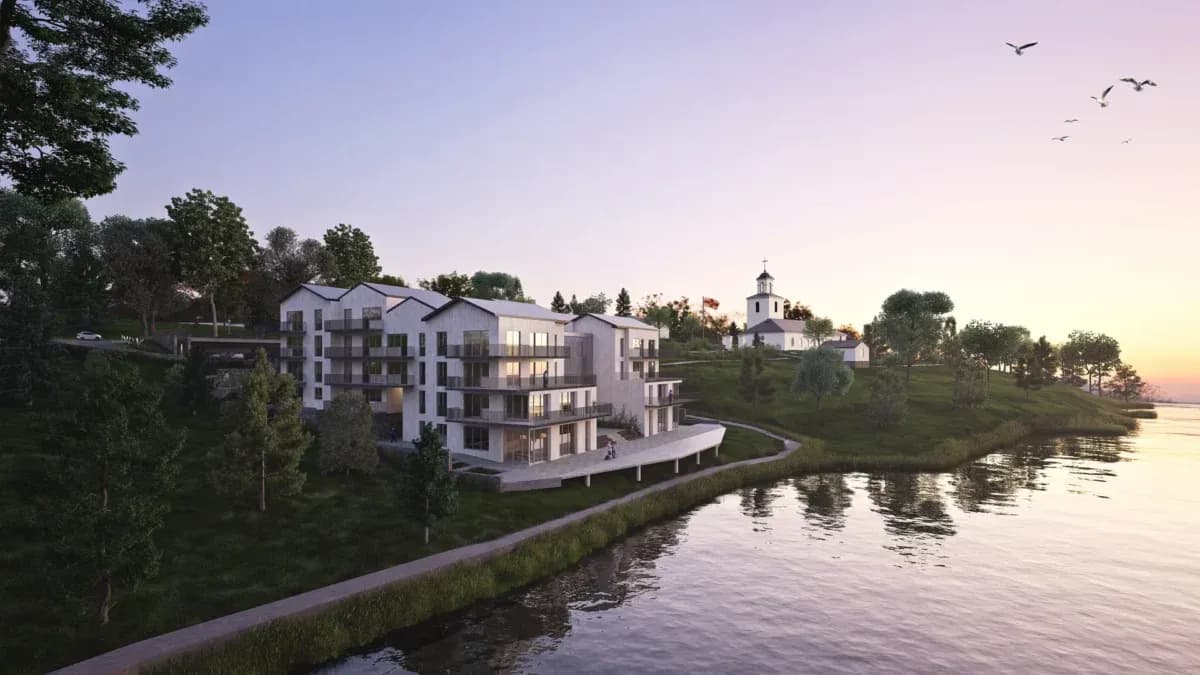
The impact of the proposed solution goes beyond the wellbeing of residents aged 65 and over. By providing functional homes free of architectural barriers, the model allows many seniors to release larger properties onto the rental or sales market, helping to ease the housing crisis affecting younger generations and new families. Highly sustainable and technologically advanced, the housing complexes — developed using BIM (Building Information Modeling) methodology — will take on the characteristics of each region, organised into three residential typologies: Casa Vista (60 apartments), Casa Pátio (50) and Terraços do Sol (30).
Buildings will reflect the needs and DNA of each region
Salomé Martins welcomes the positive reception from the Portuguese municipalities she visited; in some of them preliminary studies are already under way, with construction anticipated within a year. It is, in essence, a collaborative effort with local bodies, to which the support of the Portuguese-Swedish Chamber of Commerce, the Swedish Embassy in Portugal and the Portuguese Embassy in Sweden has contributed decisively.
Originally published in Diário de Coimbra on 18 August 2026. Reproduced with permission. Translation by Solhemmet.
